

Pongsa KANTASORN

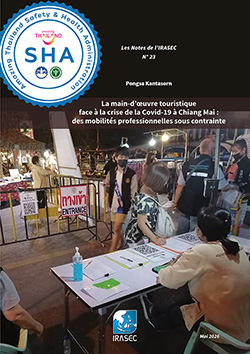
The COVID-19 pandemic brought international tourism in Thailand to a standstill, leading to business closures, unemployment, and significant income losses for workers in the sector. Based on a qualitative survey conducted in Chiang Mai—based on 101 interviews between July 2021 and February 2022—this research examines the strategies adopted by the tourism workforce in response to the crisis. Findings reveal that public assistance, which was limited and sometimes discriminatory, proved insufficient, pushing workers to develop individual survival strategies, including professional and geographical mobility into other sectors. These forced transitions raise issues of resource access, living conditions, and well-being, while also resulting in a loss of skills for the local tourism sector. The study thus sheds light on recent transformations in the tourism industry and the challenges posed by future crises.
—