




The 2026 International Conference of ASEAN Studies
Conference
 23-24 October 2026
VNU, University of Social Sciences and Humanities (Vietnam)
The 2026 International Conference of ASEAN Studies is coorganised by Korea Institute for ASEAN Studies, Busan University of Foreign Studies (KIAS-BUFS), the University of Languages and International Studies, Vietnam National University, Hanoi (ULIS-VNU), and the Institute of Literature - Vietnamese Academy of Social Sciences (VIL-VASS). The theme is “ASEAN-ROK Partnership in the Era of Crisis : Bridging Development, Innovation, and Cultural Identity”.
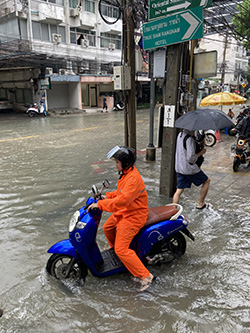
At this conference, Thanawat BREMARD will presente a paper entitled “Pragmatism as social capital : Community responses to urban floods in Thai provincial cities” in “Climate Justice and Green Transition in ASEAN–ROK Cooperation : Community Resilience, Governance, and Cultural Identity” session.
He will also serve as a discussant during the session presentation “Civil-society connectivity and community-driven development in Southeast Asia : Case studies of rural areas in Thailand and the Philippines.”
Abstract
Most countries in the monsoonal region of Southeast Asia are no stranger to flooding. Despite extensive experience with recurrent flooding, the phenomenon is still commonly depicted in a depoliticized manner as one where people are at the mercy of nature’s whims. Urban Political Ecology (UPE) counters this mainstream depiction by positing that flooding is fundamentally a political challenge rooted in the alteration of the environment and its hydrology through socio-economic and political processes. Through case studies in Thailand in the context of participatory action research conducted by the Thai Water Partnership (TWP) in provincial cities, community-driven initiatives demonstrated rapid mobilization of resources that leverage social capital to address institutional gaps in formal disaster management. This culturally embedded pragmatism provides crucial short-term resilience but over-reliance on it tends to mask systemic deficiencies in long-term preparedness. The improvisational nature of community responses cannot replace comprehensive planning. In terms of flood impact prevention, much can be gained from implementing simulation exercises and revising flood management indicators to adapt to the increasing severity and unpredictability of floods driven by climate change. Recognizing the strengths and limitations of this social capital is essential for developing inclusive governance strategies that integrate local knowledge with institutional accountability to enhance sustainable flood management and climate resilience.
12 October 2026


