


Epistemologies of Participatory Research on Social Development Programs in Southeast Asia
Report on DAY 1, September 11, 2025, Chulalongkorn University, Bangkok
Conférence
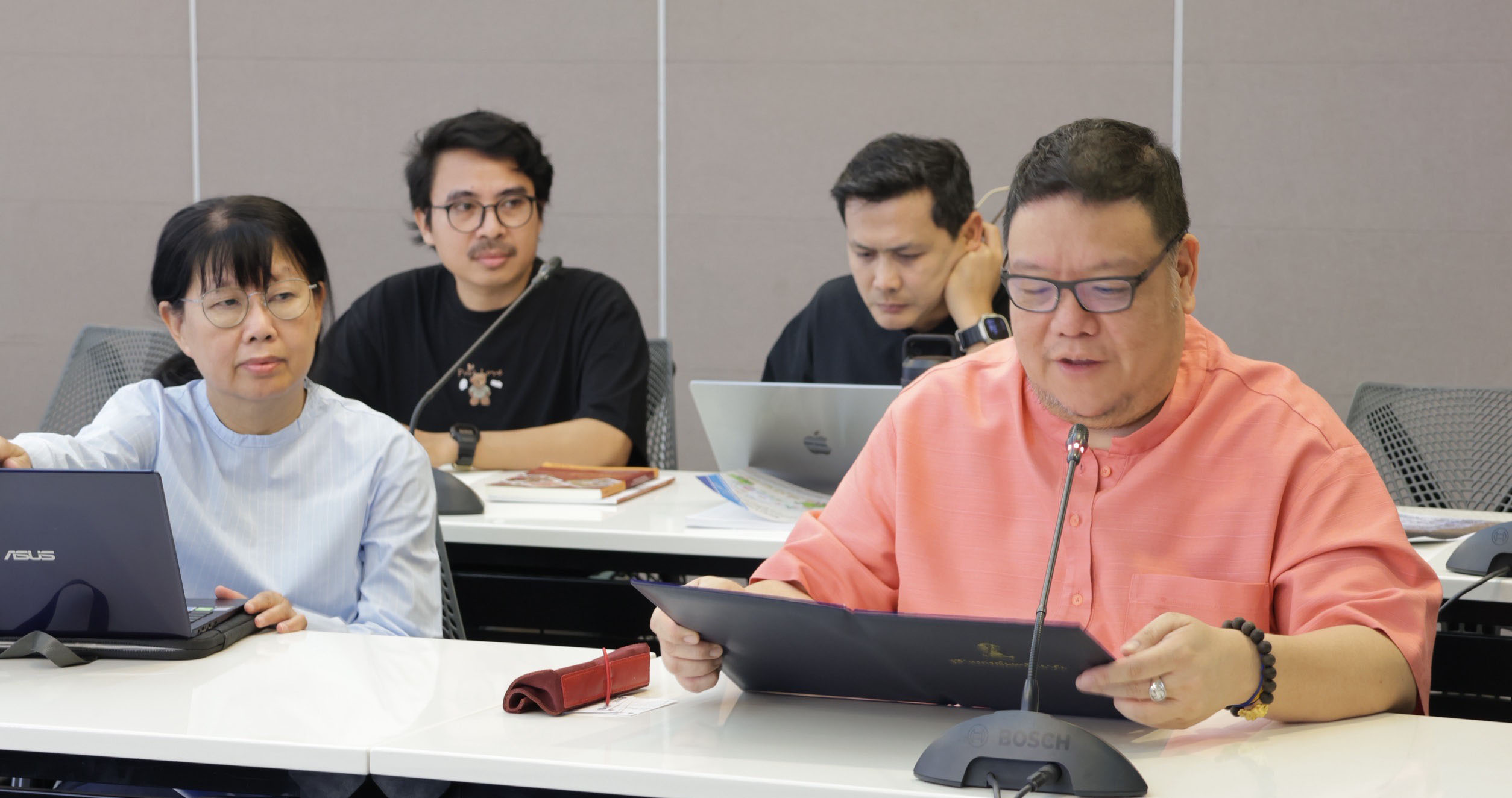 The conference was opened by the dean of the Faculty of political science, Chulalongkorn University, Prakorn Siriprakob, and the director of IRASEC, Jérémy Jammes, who gave introductory remarks and recalled the recent history of collaborations between the two institutions, namely a conference on water governance in 2022, a seminar on electoral processes in Southeast Asia in 2023, followed by the signing in 2024 of a MoU between Antoine Petit, president of the CNRS, and the president of the university.
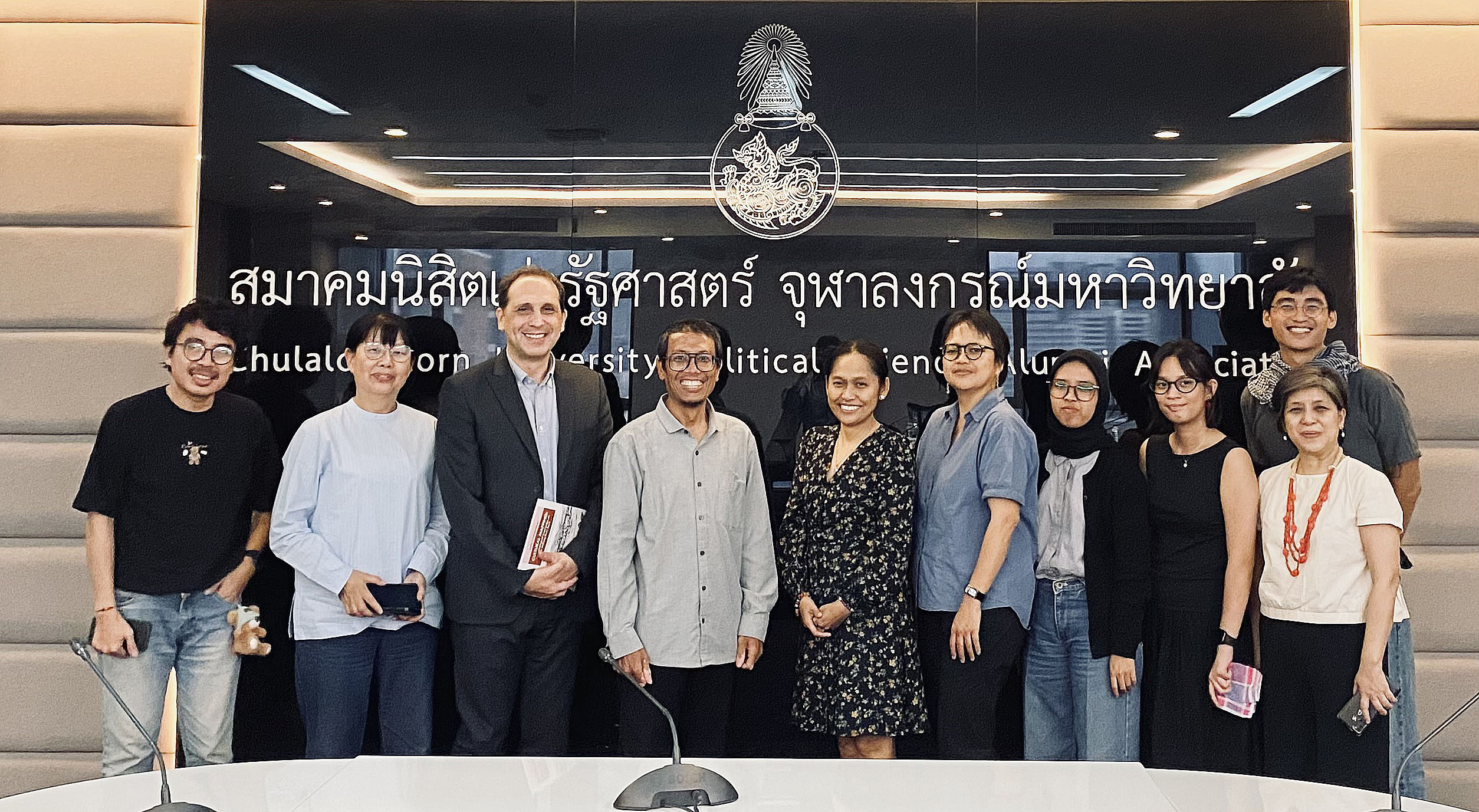
Gabriel Facal, deputy director of IRASEC, then recalled the history of collaborations with the participants, which are very rich and diverse. They concern the doctoral student training SUDSSEA, organized in 2024 partnership with CIDS (University of the Philippines Diliman, Philippines), represented at the conference by Simeona Martinez, Maria Dulce Natividad, Eunice Santiago and Vicente Dimalanta. SUDSSEA also involved Mohamad Shohibuddin (Institut Pertianian Bogor, Indonesia) and Malee Sittikriengkrai (Chiang Mai University, Thailand), Jean-Christophe Castella (French National Research Institute for Sustainable Development, IRD), as speakers. Several conferences were organized with M. Sittikriengkrai, in Chiang Mai University and Mae Fah Luang University, Chiang Rai. Mohamad Shohibuddin (who attended with a young talented colleague, Shela Herlita) and Malee Sittikriengkrai are also partners of the French 3-year project ANR AltLife-SSEA, which was preceded by a workshop at EFEO Chiang Mai and field visits in the surrounding countryside. Serina Rahman (National University of Singapore), who has participated in several editions of the ALTERSEA conferences on social movements in Southeast Asia organized by G. Facal, is a contributor to a special issue on engagement in research, co-coordinated by G. Facal for the journal TRaNS (Cambridge University Press). The partnership with Yulia Sugandi was established recently, as part of plans for collaboration with the Centre for Transdisciplinary and Sustainability Science (CTSS, Institut Pertanian Bogor, Indonesia). She is a leading researcher within the centre, bringing with her a wealth of practical experience, accustomed to major international forums and multi-scale approaches. With Jean-Christophe Castella (IRD), moderator of the morning session, was organized a 4-day training session on “Risk management research methods in the Thailand-Laos cross-border zone”, Chiang Rai University. Other researchers participated in these collaborations and could not to attend the conference, but had a major influence on its design : Aj. Chayan Vaddhanaphuti, Eduardo Tadem, and Mary Racelis.
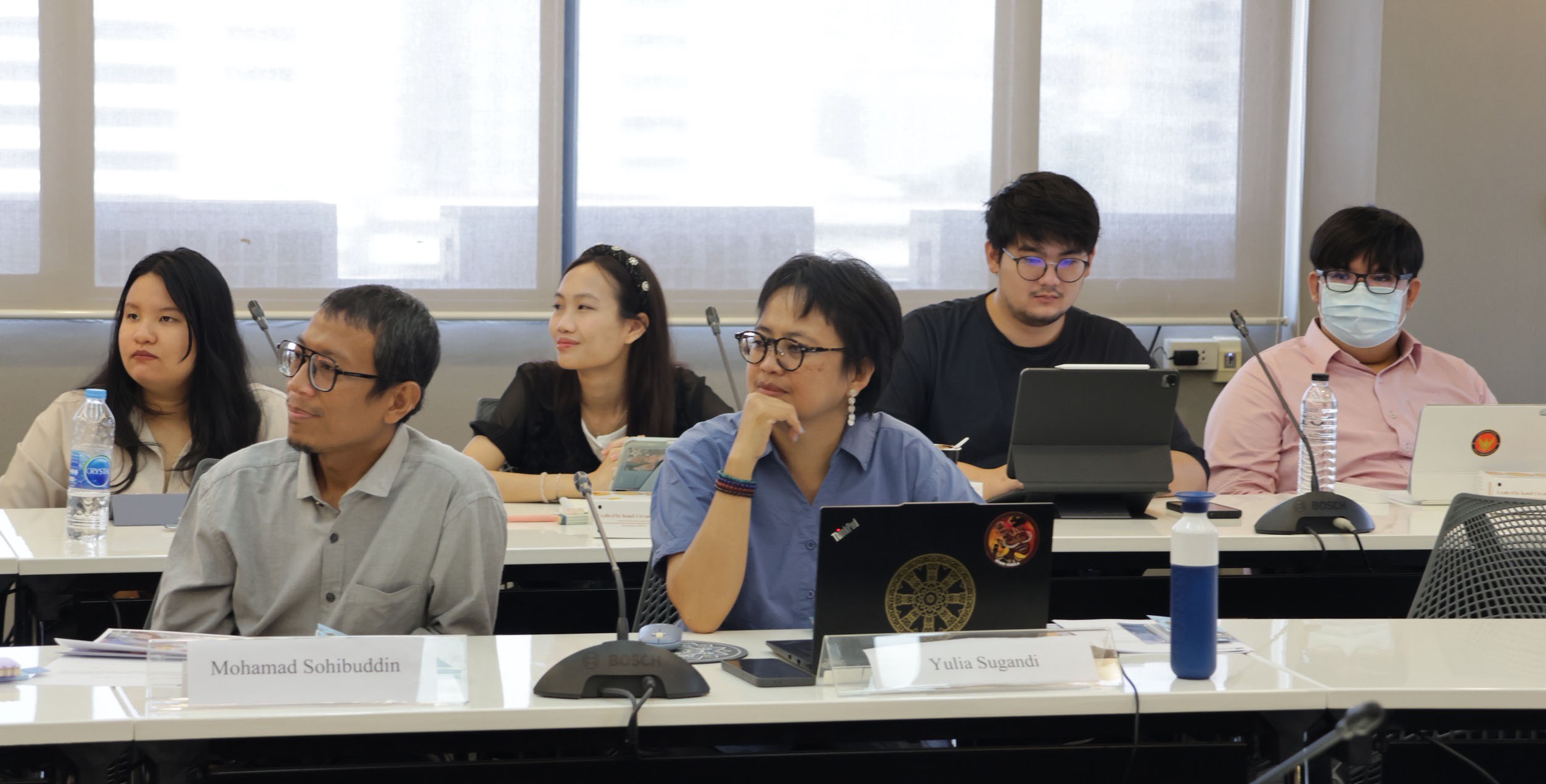
 The presentations focused on various collectives through a variety of approaches : 1) AltDev-CIDS researchers presented four cases in the Philippines : academic, policy-focused and activist research designed to assist people’s organization in the urban poor and informal transport sector ; a homeowners association mobilized against forced evictions and demolitions to protect its members’ right to housing ; a disaster risk reduction research-action project to document and map flood-prone informal settlements ; as well as the historical struggles for reproductive rights. 2) Y. Sugandi shared her experience in Papua highlands to implement relational science within transdisciplinary research serving as a collaborative learning platform for crafting adaptive solutions. 3) S. Rahman explained how her professional and personal life became intermeshed, when developing a citizen science aimed at fostering community-driven marine conservation ; 4) M. Sohibuddin and S. Herlita traced the intellectual and practical journey of the late Professor Sajogyo, before briefly describing the many activities carried out within the eponymous foundation, based on intense and long-term exchanges with local populations all across the archipelago, for research and training in agricultural techniques and economic empowerment. 5) Lastly, M. Sitthikriengkrai explained the original participatory approach developed in collaboration with C. Vaddhanaputhi, aimed at documenting the local perception of the impacts of dam construction and to amplify the voices of communities at risk.
The research methods discussed include a range of multimodal tools including ethnography, participatory mapping, forum theatre, canvas and art, natural materials at hand, and simple audiovisual resources for community-driven data collection. Research teams also nurtured collaborative environments via workshops, games, peer training, and dialogues to collectively develop situational analyses and community management plans, serving both educational and analytical purposes.
 These approaches challenge traditional boundaries between researchers and their contexts, enhancing multispecies interactions and encouraging reflexivity concerning ethical issues in research. With a focus on fair participation, the study day tackled relational imbalances shaped by historical and geopolitical factors, ultimately striving to equalize voices within the research network. The conference has epistemological significance in that it questions the relevance of intellectualized and detached approaches to understanding socio-environmental phenomena. In this regard, participants demonstrated how the mobilization of emotions and commitment to values contributes to the co-construction of knowledge. These dimensions require moral courage, creativity, empathy, reflexivity, and imagination.
At the end of the conference, participants planned to continue collaborating, for example on the theme of participatory mapping, construction tools, and different publication formats, starting with a book that would allow each contributor to develop case study descriptions, provide contextual information, and include biographies. On this basis, a second publication could be developed that would summarize the contributions in a more concise manner and with a tighter comparative common thread. The idea of consolidating a transdisciplinary network and to organize regional transdisciplinary workshops with local participants was also raised. The following day, designed as a closed-door working meeting, aimed to explore these avenues in greater depth.
3 octobre 2025